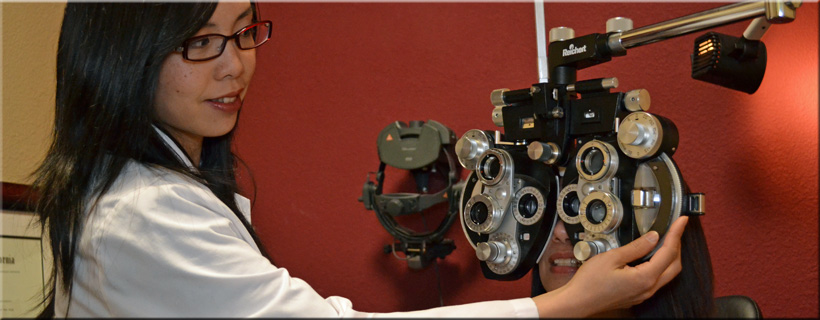

Comprehensive Vision and Eye-Health Evaluation
Eye Exams in Santa Clara
What happens during a comprehensive eye exam?
- Distance and near visual acuity
- Refraction for glasses or contact lens prescription needs
- Eye focusing, movement, and coordination
- Peripheral vision, pupil response, color vision, or depth perception
- Eye-pressure measurement
- External and internal eye-health evaluation
Common eye-exam questions
Does every comprehensive eye exam include dilation?
Dilating drops are often used when the optometrist needs a wider view inside the eye. Whether dilation is appropriate depends on your symptoms, health history, risk factors, and examination findings.
Dilation can temporarily blur close vision and increase light sensitivity for several hours. Bring sunglasses and ask the office about driving if you are concerned.
How often should I have an eye exam?
The appropriate schedule depends on your age, symptoms, prescription changes, eye and general health, family history, contact lens use, and risk for eye disease. Your eye-care professional can recommend an interval for you.
Is a vision screening the same as a comprehensive eye exam?
No. A screening checks selected aspects of vision. A comprehensive examination uses additional procedures and professional evaluation to assess vision, prescription needs, eye function, and eye health.
What should I bring to an eye exam?
Bring your current glasses, contact lenses and their cases, a medication list, relevant health and family eye history, insurance information, and questions for the doctor. Sunglasses can help if dilating drops are used.
Can an eye exam find problems before I notice symptoms?
Related eye-care information
Eye conditions
Review plain-language information about common eye and vision conditions.
Treatment and referral
Learn how Optima Optometry approaches evaluation, management, and specialist referral.