
Material, Vision Need, Wear, and Replacement
Types of Contact Lenses
How do contact lens designs differ?
Soft lenses
Soft lenses are flexible and are available for many prescriptions, replacement schedules, and wear patterns.
Rigid gas-permeable lenses
Rigid gas-permeable, or RGP, lenses keep their shape on the eye and allow oxygen to reach the cornea. They can take longer to adapt to and have different care requirements from soft lenses.
Toric lenses
Toric lenses are designed to correct astigmatism. Their fit and orientation on the eye are evaluated during a contact lens fitting.
Multifocal lenses
Multifocal contact lenses use more than one focusing power to support vision at different distances. Vision goals and adaptation vary by patient.
Specialty designs
Specialty designs may be considered for particular corneal, eye-surface, or vision needs. An individualized evaluation determines whether one is appropriate.
Decorative or colored lenses
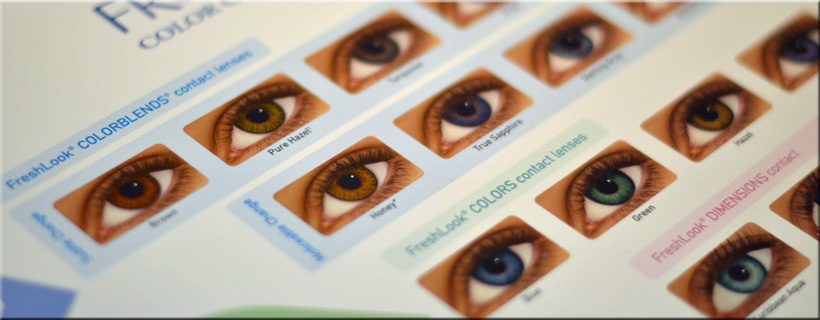
Decorative lenses change eye appearance and may or may not correct vision. They are prescription medical devices and still require an examination, proper fit, and valid prescription.
Wear schedule and replacement schedule are different
- Daily wear: Designed for use while awake and removed before sleeping.
- Extended wear: Specifically prescribed for overnight wear according to an eye-care professional's schedule.
- Daily disposable: A new pair is worn once and discarded at the end of the day.
- Planned replacement: Reusable lenses are replaced on the schedule prescribed for that lens and patient.
Common questions about contact lens types
How are contact lenses categorized?
Contact lenses can differ by material, how long they are designed to be worn each day, how often they are replaced, and the vision or eye-health need they address.
Are daily wear and daily disposable lenses the same?
No. Daily wear describes lenses intended for daytime use rather than sleeping. Daily disposable describes a replacement schedule in which a new pair is worn once and discarded at the end of the day.
Can I sleep in contact lenses?
Only sleep in contact lenses if your eye-care professional has prescribed lenses for extended wear and given you a specific schedule. Sleeping in daily wear lenses increases the chance of a serious eye infection.
Which contact lens type is best for me?
The best option depends on your prescription, corneal shape, eye surface and tear film, comfort, age, activities, and ability to follow the wear and replacement schedule. A contact lens examination and fitting are required.